The Most Important Component of a Legacy

AgLegacy_IMAGE
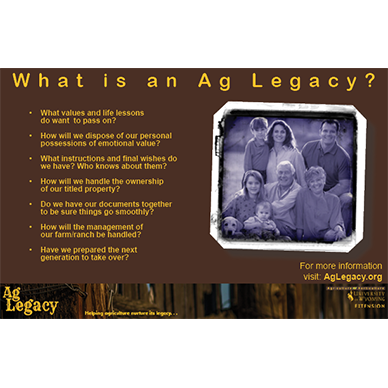
Values and life lessons has been identified as the most important component of a complete legacy. This is made up of 3 separate components, including Family Traditions, Family History and Beliefs.

Family traditions consist of religious, cultural and as well as family traditions handed down through generations. Traditions can help families improve communication, learn to value time spent together and celebrate each other’s achievements. All of which can help families get through tough times and changes.

Family histories may not include anyone famous, or infamous. However, they are of great value to the family, no matter what the tale. Many great stories can be found or shared that can bring a family’s history to life. Look for ways to preserve your own and your family’s history through books, audio or video recordings, etc.

Beliefs: A person’s beliefs are very important because those beliefs define the limit of that person’s experience. A person’s belief system is the set of precepts by which they live daily life and that govern their thoughts, words, and actions.

Taken together these create a person’s legacy. When a family identifies these for each other and themselves, they begin to define their own legacy. This legacy can live on and serve as inspiration and guidance for future generations.

#AGLEGACY.org #FarmSuccession #EstatePlanning
Values and Life Lessons

AgLegacy_IMAGE

Are you struggling to define your own legacy? Is your family wondering where to begin the process of succession of the family farm or ranch? Are you struggling to convey the values and lessons learned in a life spent working on the family operation?

Begin by defining your own Ag Legacy!
Define your own values and life lessons by identifying family traditions, family history, and the beliefs that contribute to your core values. These will guide your decisions day to day. You can then begin the process of preserving and passing on your legacy. We all want to be remembered. By leaving a legacy, the values and life lessons from the past will be passed on and can act as a guide for future generations.

#AGLEGACY.org #FarmSuccession #EstatePlanning
What is the Most Important Component in Creating your Ag Legacy?

2018_12_AgLegacyNewsletter

What is the Most Important
Component in Creating your Ag Legacy?

There are many obstacles that prevent families from discussing and planning for transition of the family farm or ranch to the next generation. To name just a few: not knowing where to start, who wants to take over and how, or just a lack of time to sit down and talk. Emotional ties are often an intrinsic aspect of ownership, as well as the founding generation’s identity.

…to read more click here

AG LEGACY

AgLegacy_IMAGE

##AGLEGACY.org #FarmSuccession #EstatePlanning
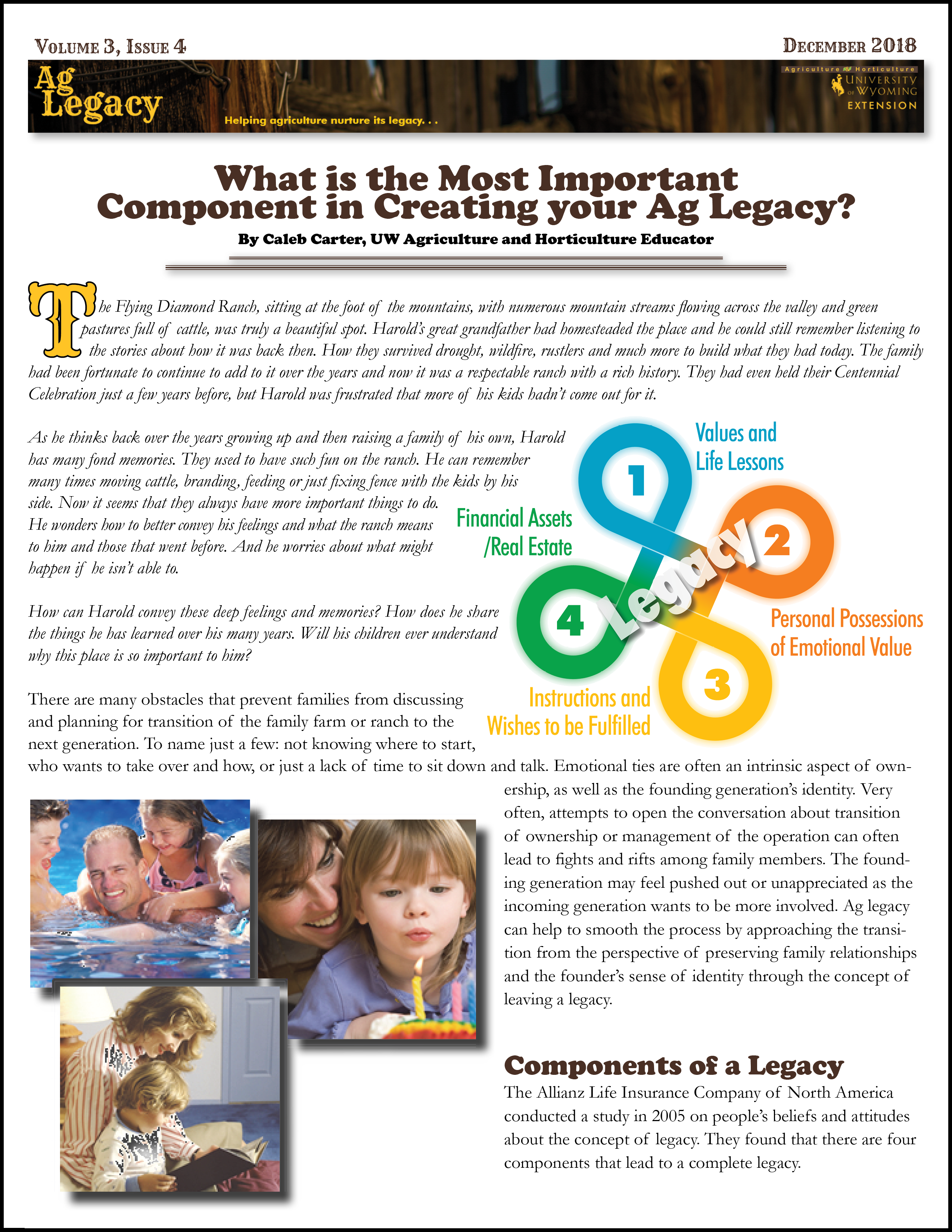
Helping agriculture nurture its legacy . . .
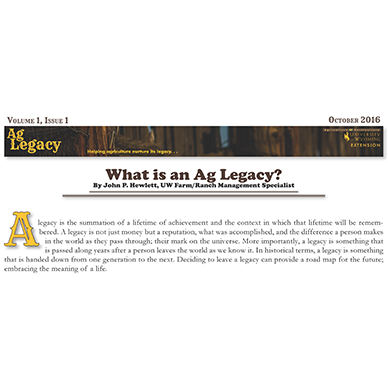
A legacy is the summation of a lifetime of achievement and the context in which that lifetime will be remembered. A legacy is not just money but a reputation, what was accomplished, and the difference a person makes in the world as they pass through.

How Do We Discuss What Really Matters?

AgLegacy_IMAGE

#AGLEGACY.org #FarmSuccession #EstatePlanning
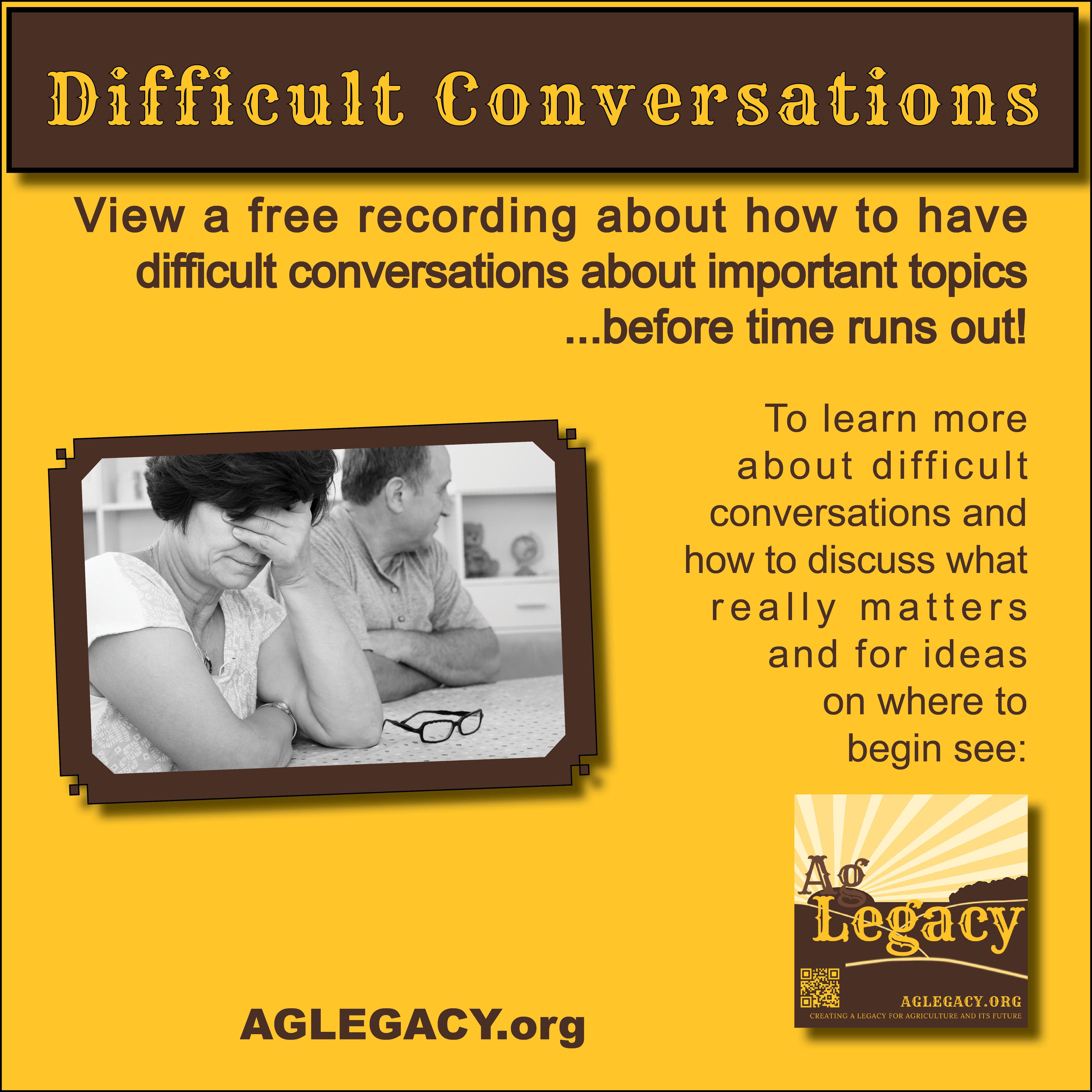
Each difficult conversation is made up of three, distinct conversations: the What Happened? Conversation; the Feelings Conversation; and the Identity Conversation.

Mistakes in Difficult Conversations
Mistake 1 – Our assumptions about intentions are often wrong. Mistake 2 – Our good intentions don’t sanitize our bad impact. Mistake 3 – Blaming the other person.

Contributions to Difficult Conversations
Mapping contributions to the problem can lead to a much better understanding of the situation. Ask “What is the other person contributing?”, “What am I contributing?” and “Who else is involved?” Understanding what has contributed to the problem makes it easier to examine all the issues, as well as encourage learning and change.

Feelings in Difficult Conversations
How we handle our feelings can often explain how a situation got out of hand. It is
best if we own our own feelings, while keeping in mind that: feelings matter, we often try to block our feelings, unexpressed feelings can make it difficult to listen, and feelings are normal and natural.

Learning Conversations and the Third Story
A learning conversation should focus on: 1. Learning their story, 2. Expressing your views and feelings; and 3. Working together to explore possible solutions. One helpful way forward is to begin from the third story, keeping in mind that there is: my story, their story, and the Third Story (the real story). Get the other person’s story, share your story, then move to consider the three conversations: “What happened?”, “What feelings were involved?”, and “What identity issues were involved?”